Creative Best Practices for Arrow Puzzle Games in 2026

Simple rules. Instant participation. Endless creative variations.
Among the many puzzle-game creative trends that have emerged over the past year, one format has quietly become a standout performer: arrow puzzles.
These ads do not rely on characters, narratives, or elaborate world-building. In many cases, they look surprisingly simple. Yet some of the highest-impression creatives in recent months have come from this category.
The reason is not the mechanic itself. It is the creative structure behind it.
Arrow puzzle ads combine three elements that are particularly effective for UA: a self-explanatory rule set, visually chaotic game boards, and highly satisfying progression. Together, they create a format that is easy to understand, difficult to ignore, and highly scalable across creative variations.
Based on top-performing playable and video creatives tracked by Insightrackr over the past month, a clear pattern is emerging.

The Core Insight: From Chaos to Order
Most puzzle ads need to teach the user what to do. Arrow puzzles often do not.
The moment users see a crowded board filled with blocked paths, overlapping arrows, and unfinished routes, they begin processing the challenge. The mechanic is visible. The objective feels discoverable. Participation starts before interaction. This creates a unique creative advantage.
The appeal is not simply solving the puzzle. It is watching disorder gradually become order.
Every successful move unlocks space. Every released path reduces visual clutter. The board becomes cleaner, clearer, and easier to understand. That transformation creates an immediate sense of progress and control. In many ways, arrow puzzle ads turn organization itself into a reward.
The Three Motivational Layers Behind Top Playables
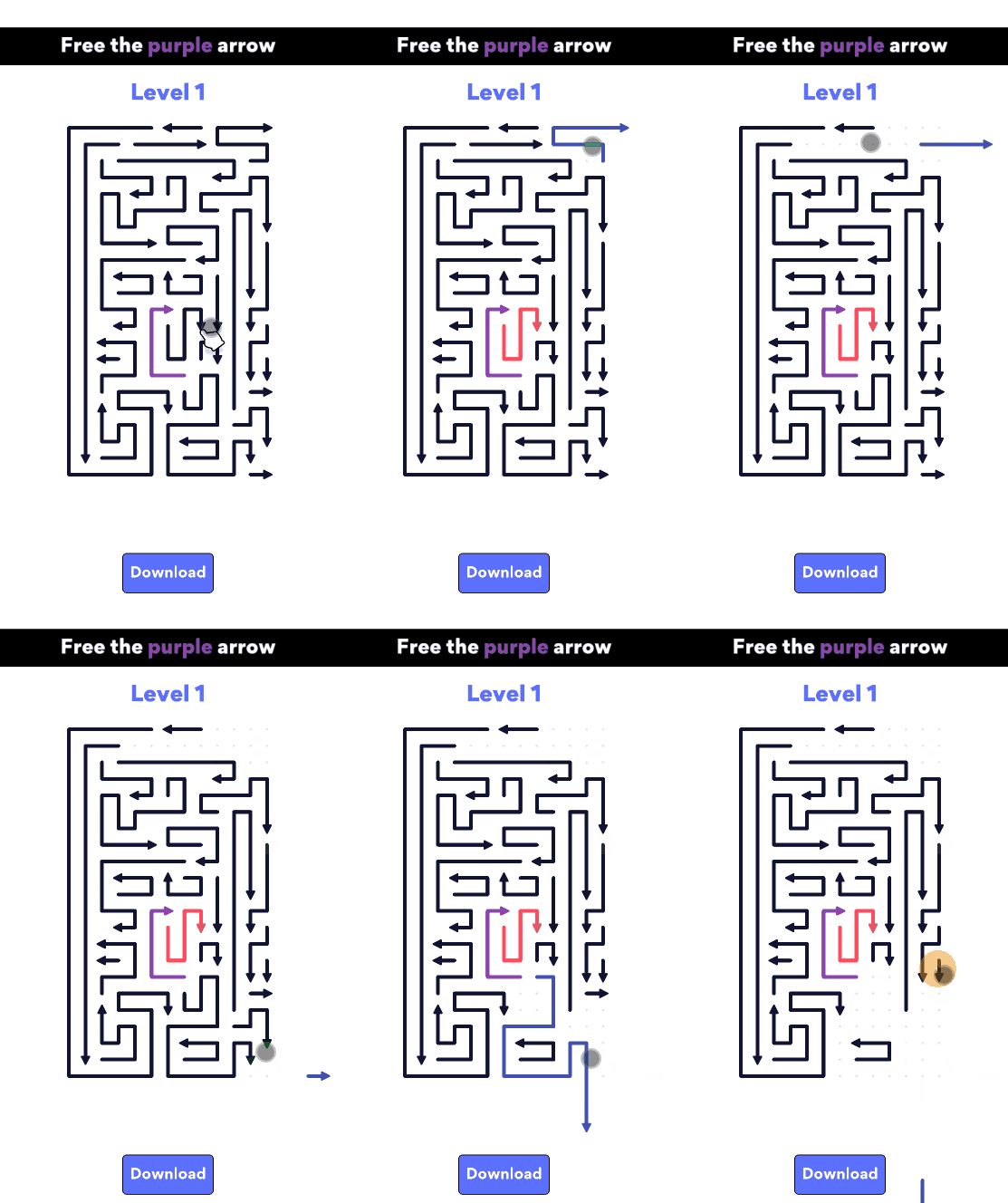
1. Goal-Based Motivation
The simplest approach is to present players with a clear objective—for example, freeing a specific arrow, rescuing a trapped object, or clearing a target number of arrows. The board remains the same, but the objective creates direction. Instead of asking users to solve an abstract puzzle, the creative gives them a concrete mission.
This structure works particularly well because it lowers cognitive load. The user knows exactly what success looks like from the first screen.
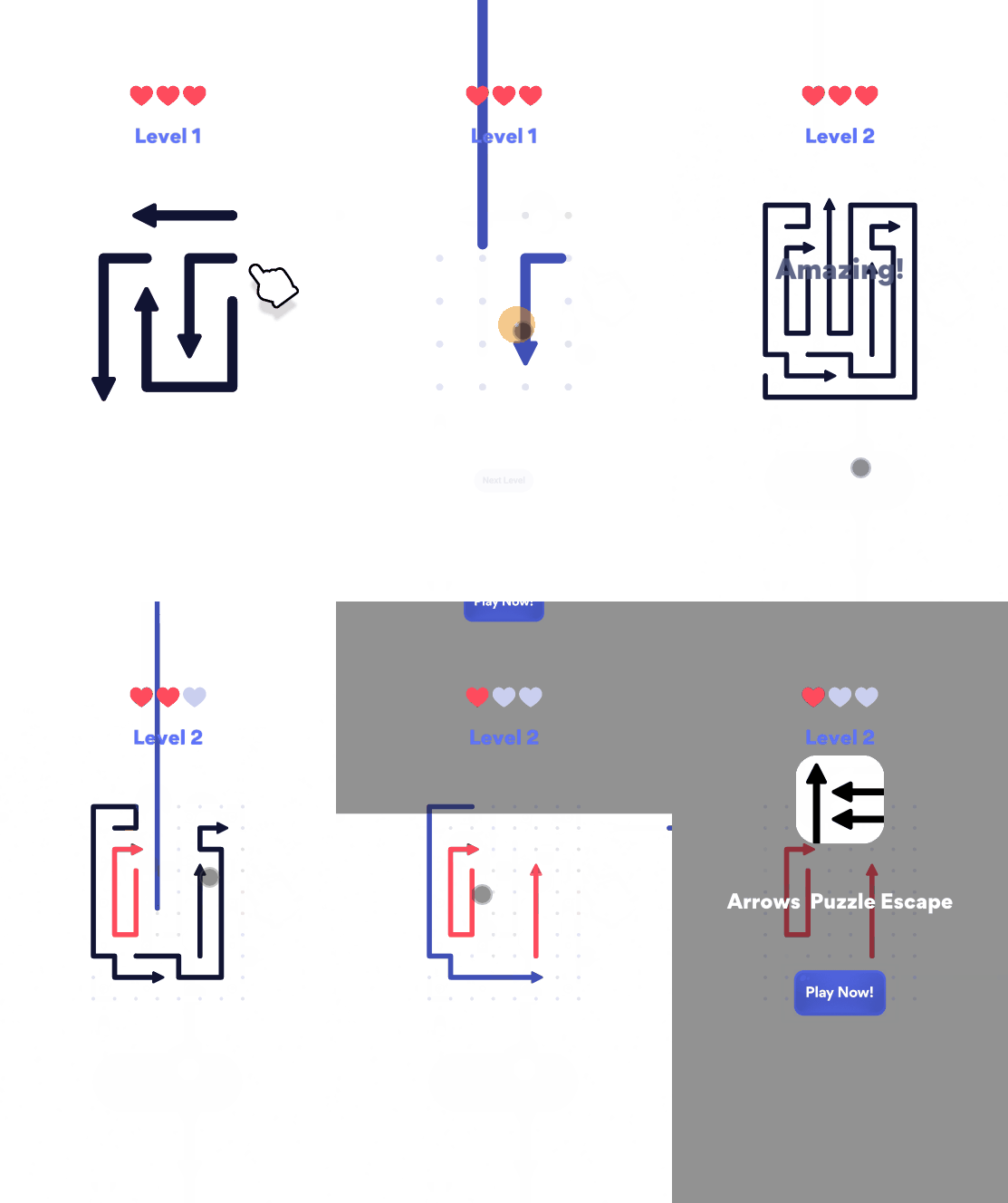
2. Pressure-Based Motivation
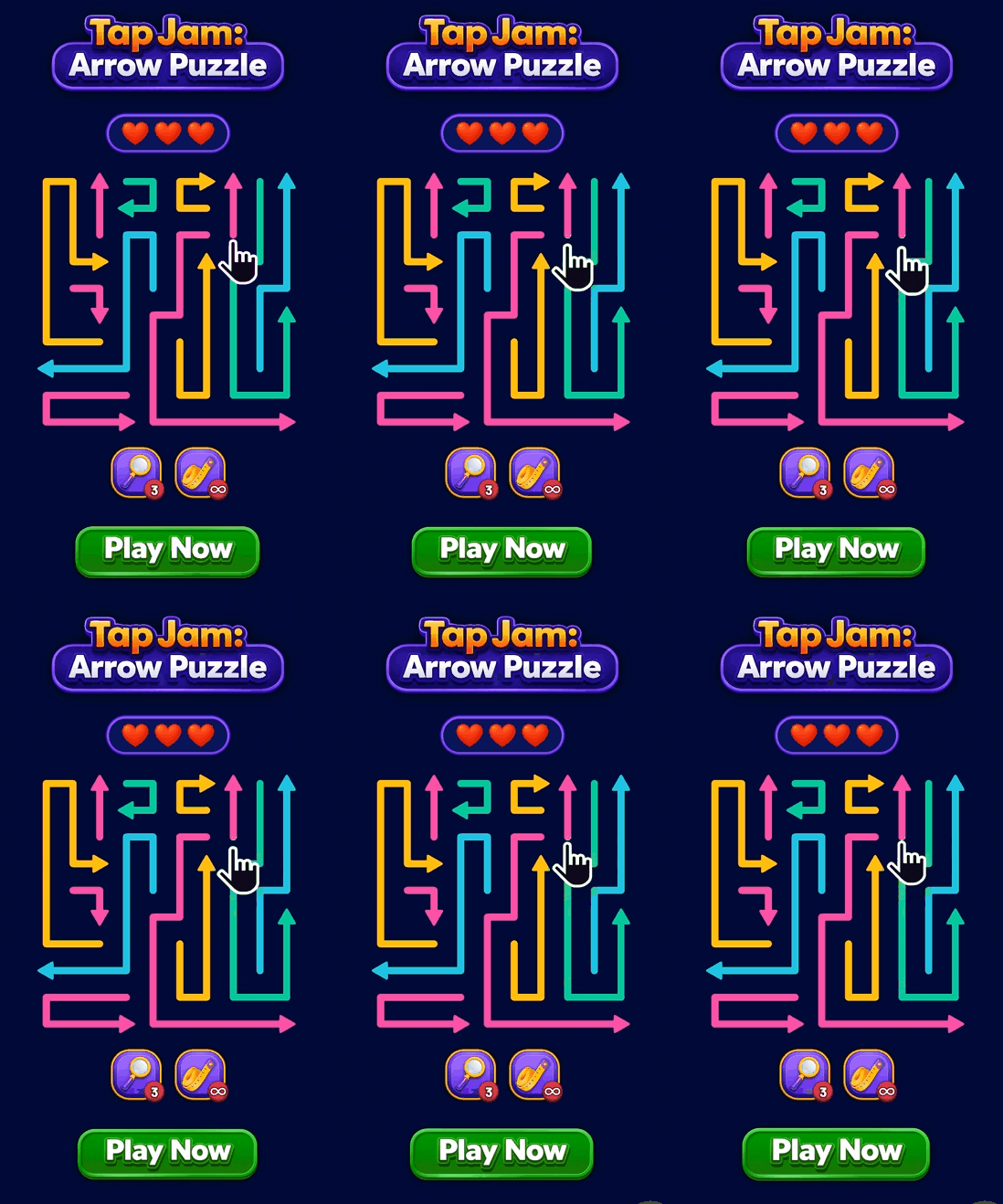
Another common layer introduces consequences. Lives, limited mistakes, fail states, or challenge indicators increase tension without changing the underlying mechanic. The puzzle remains easy to understand, but every move suddenly carries more weight. This shifts the emotional experience from simple exploration to decision-making. The user becomes more invested because mistakes matter.
For creative testing, this format often generates stronger viewing fluctuations and more distinct moments of success or failure.
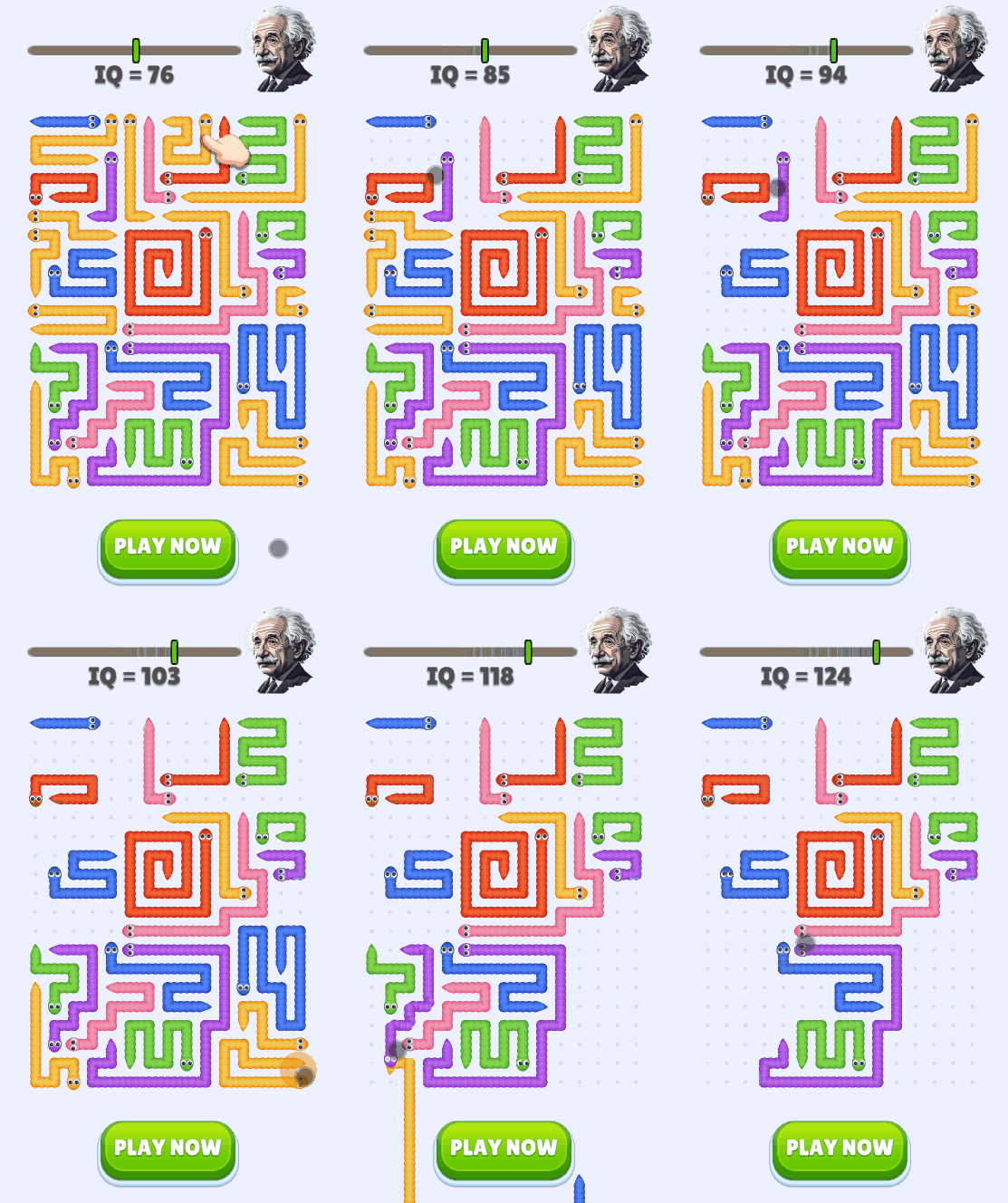
3. Mastery-Based Motivation
Some creatives frame the experience as a test of intelligence rather than a puzzle. IQ meters, brain-power indicators, progress bars, and achievement symbols turn individual levels into part of a larger journey. The goal is not just to clear the board, but to demonstrate competence.
This approach often supports longer play sessions because progress itself becomes a source of motivation. Each successful action reinforces the feeling that the user is improving rather than simply completing a task.
Video Creatives Win by Explaining Less
One of the most interesting aspects of arrow puzzle advertising is how little explanation is actually required. The strongest videos typically focus on participation rather than instruction. Instead of teaching every rule, they create opportunities for viewers to mentally engage.
Three approaches appear repeatedly across top-performing creatives.
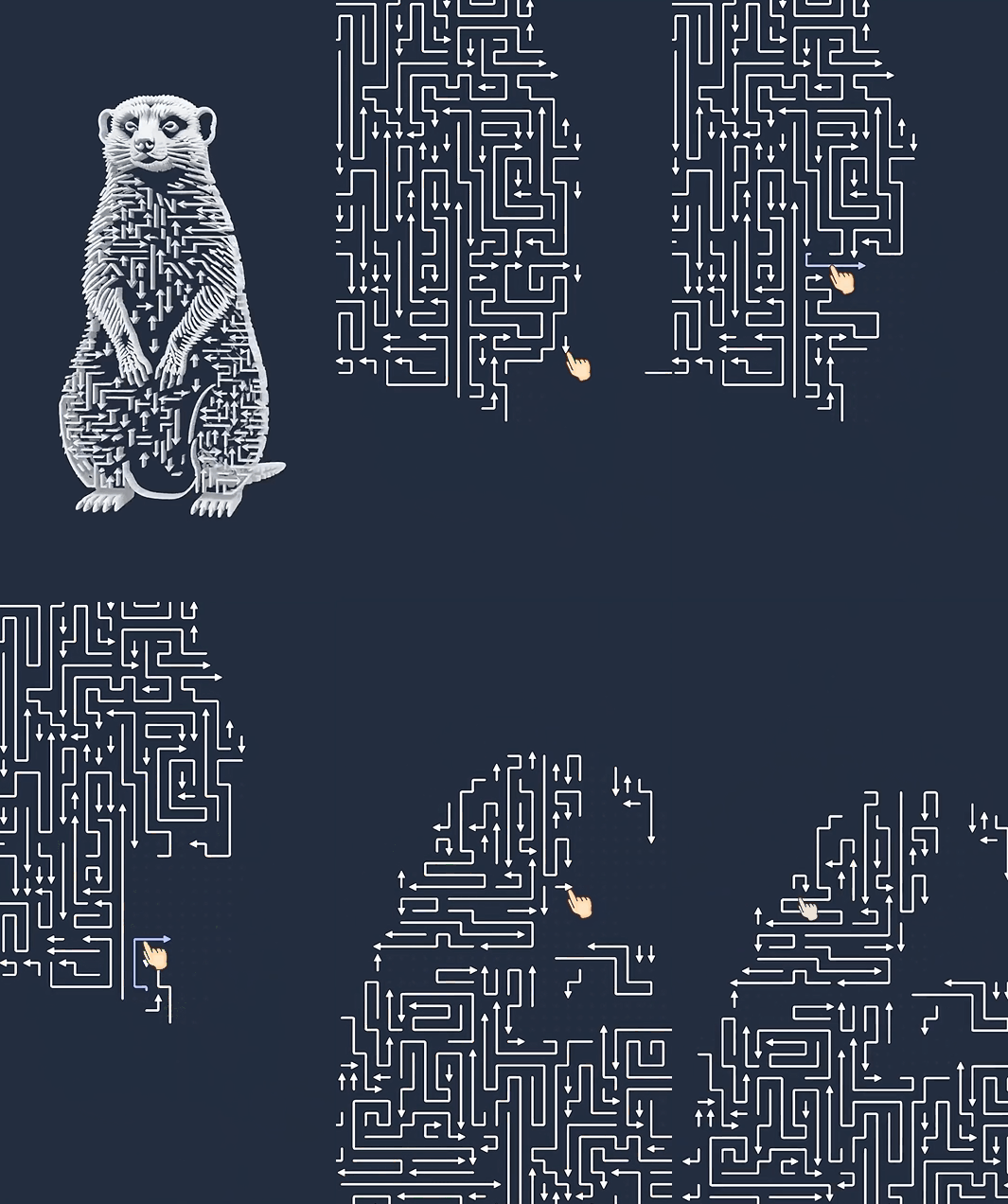
1.Direct Gameplay Demonstrations
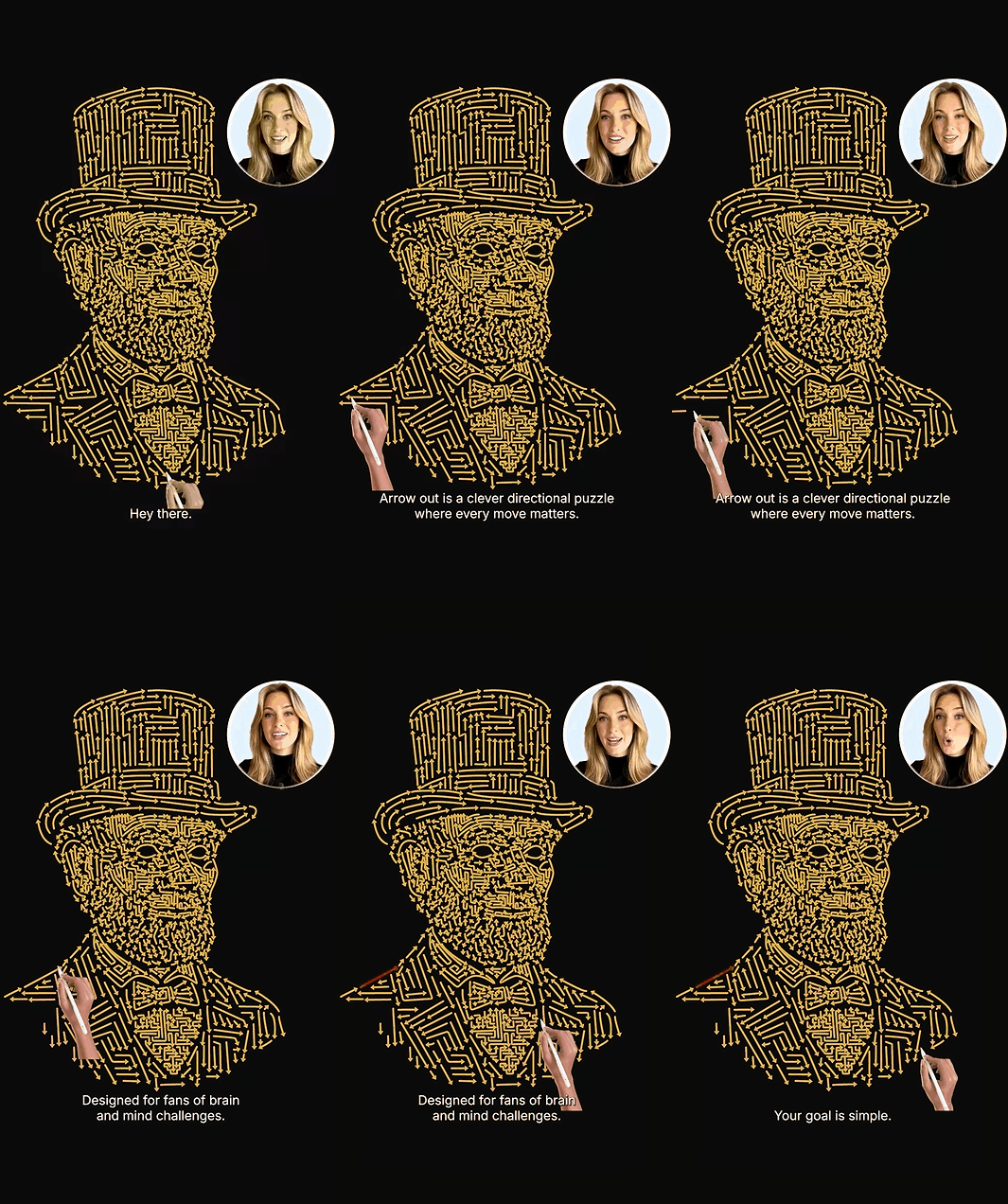
The most common format simply shows the puzzle. The layouts range from minimalist flat mazes to complex 3D shapes resembling animals or characters, capturing attention with the grand silhouette before zooming in to solve the puzzle. Moves are demonstrated, and calculated mistakes are intentionally included to provoke viewer intervention. Progress becomes visible within seconds. Many of these creatives end before the puzzle is fully solved, allowing curiosity and unfinished progress to drive the click.
2.Benefit-Led Openings
Some creatives establish an emotional expectation before showing gameplay. Messages such as "relax your mind," "train your brain," "play before sleep," or "no Wi-Fi required" appear first, often through large text overlays and simple visual backgrounds. The gameplay then serves as proof of the promise.
This approach is highly effective when positioning arrow puzzles as wellness or cognitive-training experiences.

3.Human-Led Hooks
A third format uses real people to create initial engagement. A creator recommendation, a short scenario, or a conversational hook draws attention before transitioning into gameplay. The objective is not to explain the puzzle, but to reduce ad fatigue and resistance by delivering a more native content experience.
Playable vs. Video: Two Different Creative Jobs
Playable ads are strongest when the goal is to let users experience the mechanic directly—they are about participation. Video ads, by contrast, are strongest when the goal is to frame the mechanic in a way that lowers resistance before interaction—they are about positioning.
| Creative approach | Best use case | What to avoid |
|---|---|---|
| Goal-Based Motivation | Gives users an immediate objective and lowers cognitive load | Vague or unclear goals |
| Pressure-Based Motivation | Adds tension and makes each move feel more meaningful | Excessive failure pressure |
| Mastery-Based Motivation | Reinforces progress and achievement | Overcomplicated UI |
| Direct Gameplay Demonstration | Shows the mechanic instantly; utilizes 3D-to-2D transitions | Slow gameplay reveal |
| Benefit-Led Opening | Frames the product around a clear emotional or functional promise | Weak connection between text and gameplay |
| Human-Led Hook | Reduces ad resistance by making the creative feel native | Delayed gameplay transition |
A Better Testing Framework
Instead of treating every new creative as an isolated concept, UA teams should approach arrow puzzle ads as a modular testing system. This framework is exceptionally powerful for IAA (In-App Advertising) monetization models, where rapid engagement and short-term feedback loops directly influence ad LTV.
Consider focusing on five questions:
① Which board layouts create the most compelling visual chaos?
② Does goal-based motivation outperform pressure-based motivation for this target audience?
③ How much failure should be shown before viewer engagement declines?
④ Do intelligence-based indicators (IQ bars) improve conversion rates?
⑤ At what exact point should the creative cut to the CTA: after progress, near completion, or immediately after a fail state?
These questions create a more scalable testing process while keeping production focused on variables that actually influence performance.
The Production Implication
Arrow puzzle creatives are particularly well suited to template-based production. Since the core mechanic remains consistent, most creative variations come from board design, packaging, messaging, and CTA structure rather than gameplay itself.
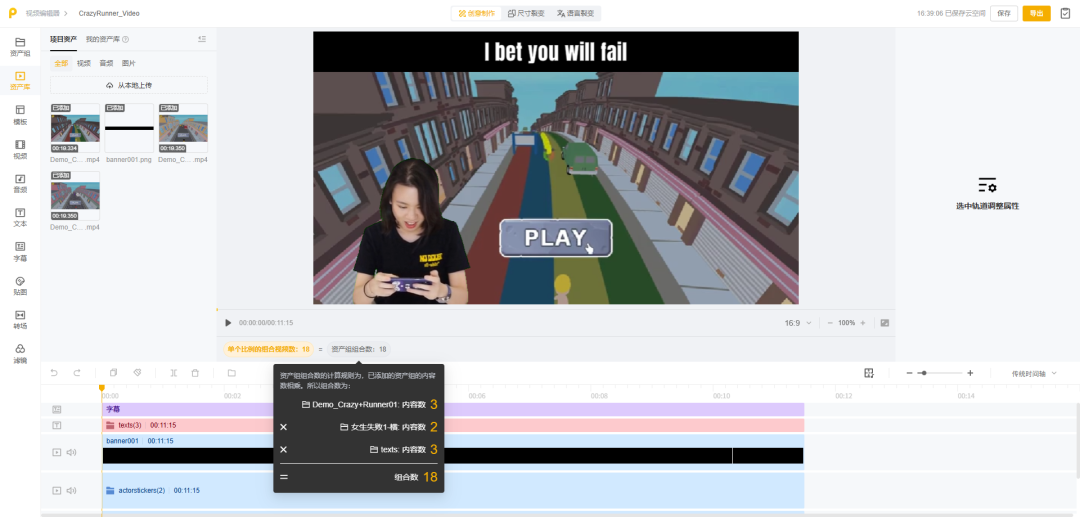
For teams using Playturbo, this production model is easy to support. Gameplay videos can be converted into playable ads, creative elements can be recombined into multiple video versions, AI avatars can help scale creator-style content across languages, and image generation can quickly produce localized puzzle assets. Together, these workflows make it easier to iterate on high-performing creative concepts rather than rebuilding every ad from scratch.
Final Takeaway
Arrow puzzle creatives are effective not because the mechanic is entirely new, but because the growth formula is clear: simple rules, chaotic boards, trial-and-error structures, and satisfying release.
The biggest opportunity lies in continuous iteration rather than gameplay innovation. By testing different board layouts, packaging layers, trial-and-error structures, and ending strategies, teams can rapidly expand creative output without changing the core mechanic. In a category built on scalable production, speed of iteration is often the real competitive advantage.
Ready to elevate your ad strategy? Explore Playturbo’s innovative solutions and discover how we help developers generate high-performing AI ads at scale. Follow us on LinkedIn to stay updated on our latest insights, creative breakdowns, and product updates. Contact us today to kickstart your next global ad campaign.