Creative Best Practices for Screw Puzzle Games in 2026
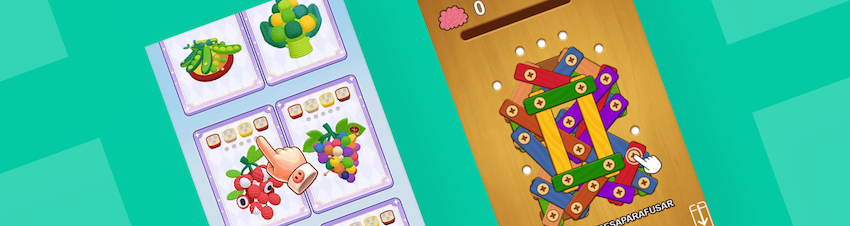
Remove. Sort. Reveal. Repeat.
Screw puzzles are no longer a short-lived casual game trend. They have become one of the most durable puzzle formats in recent UA creative charts.
The mechanic is easy to understand from the first second. Players see a screw locking a structure in place.They tap it, match the color, send it into a slot, and open the next layer. No heavy tutorial is required. The action is visible before the user even starts playing.
But the category does not keep scaling only because it is simple.
The real advantage is the creative structure behind it. Screw puzzle ads combine a self-explanatory action, visible layer-by-layer progress, and a clear source of pressure: limited slots. Together, these elements create a format that is easy to read, easy to interact with, and easy to reskin across many creative versions.
Based on top playable and video creatives tracked by Insightrackr over the past month, a clear pattern is emerging.
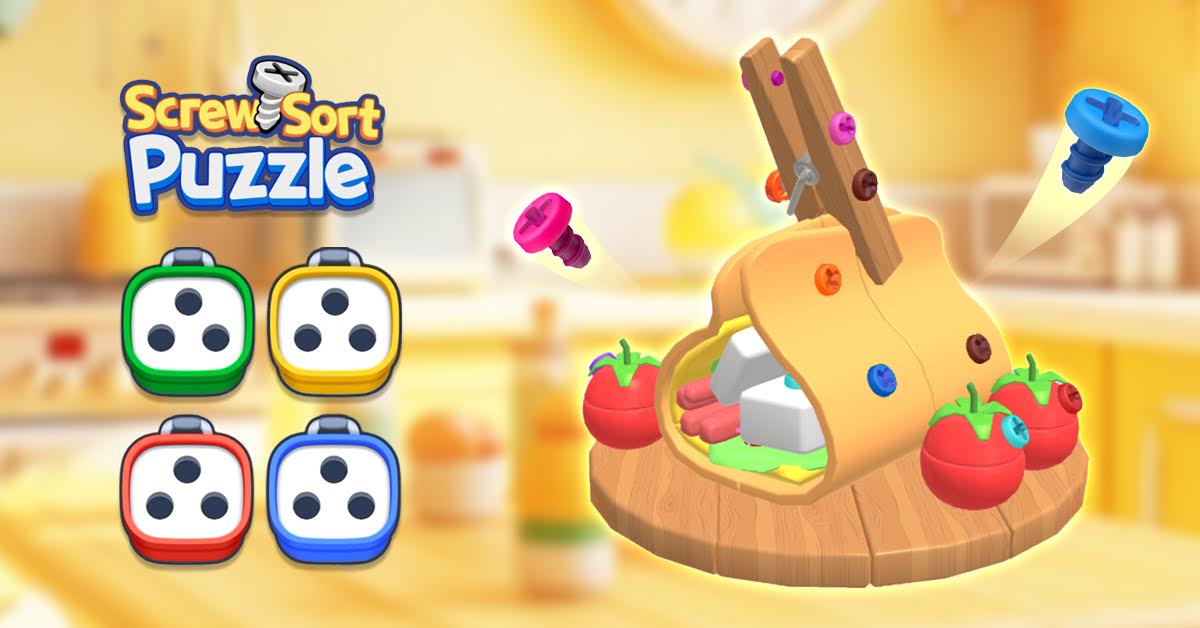
The Core Insight: Locked Structures Create Instant Participation
Most puzzle ads need to teach the player what to do. Screw puzzle ads often do not.
The moment users see a board, object, or 3D scene held together by screws, the action feels obvious: remove one screw and see how the structure changes.
This gives the format a strong creative advantage: the visual explains the goal before any copy is needed.
The appeal is not just solving the puzzle, but watching disorder turn into order, one removed screw at a time. Each move creates space, reveals progress, and increases slot pressure.
This is why the strongest screw puzzle creatives usually focus on the process, not the final result. Instead of showing completion, they work by making the viewer feel that the next move matters.
Three Playable Directions Behind Top Creatives
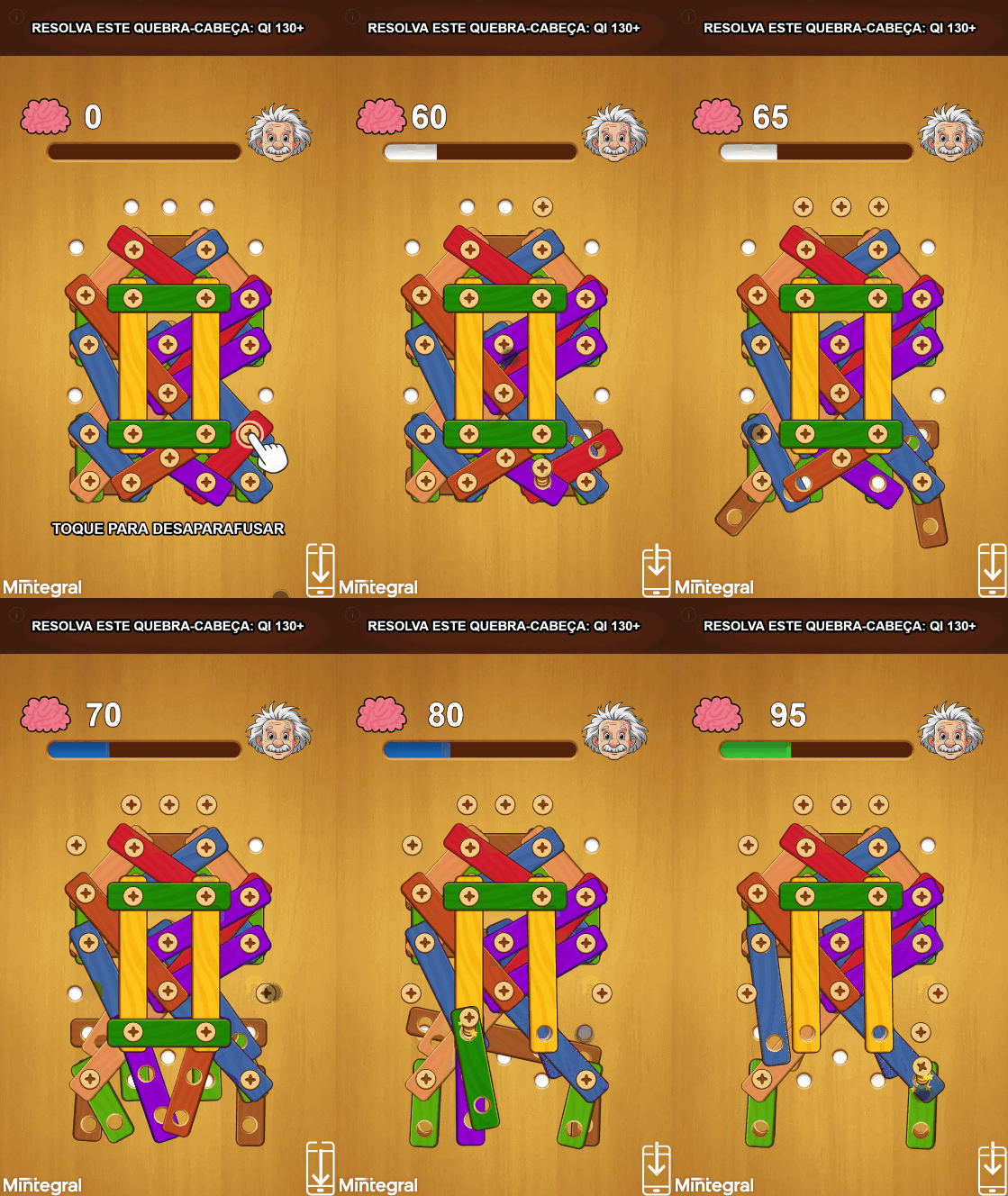
1. 2D Board Removal
The most direct format uses flat wooden boards, colored strips, and overlapping panels. Screws sit at the intersections, making the entire board look locked in place.
This structure works because the rule is instantly readable. Players can quickly judge which screw may be removable and where it should go. The top area usually shows spare slots, goals, or IQ-style progress indicators, while the bottom keeps the CTA visible.
The creative strength is clarity. 2D board removal has the lowest learning cost and is especially effective for long playable flows. As the outer layer disappears, new screws and colors appear underneath, giving users a reason to keep playing.
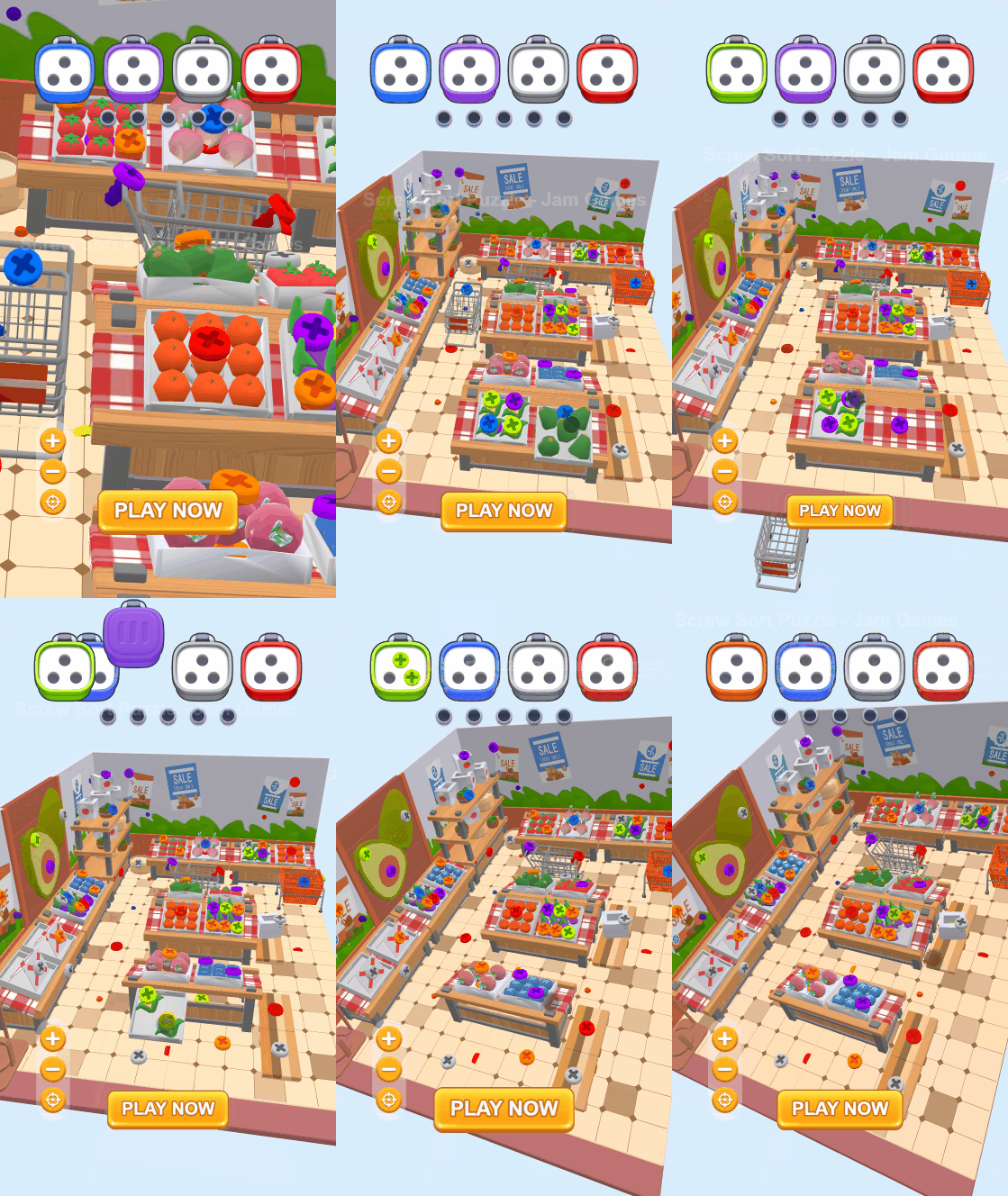
2. 3D Scene Exploration
The second direction moves the same mechanic into a full 3D scene. Screws appear on houses, kitchens, shelves, furniture, and other objects. The user can rotate the scene, search from different angles, and uncover hidden removable parts.
The rule does not change much. The perception does.
Compared with 2D boards, 3D scenes feel more premium and exploratory. The player is no longer only deciding which screw to tap. They are also looking around, rotating the object, and discovering where the next action might be.
This format is valuable because it refreshes a familiar mechanic without forcing a new rule set. For creative testing, changing the scene can be more efficient than changing the gameplay.
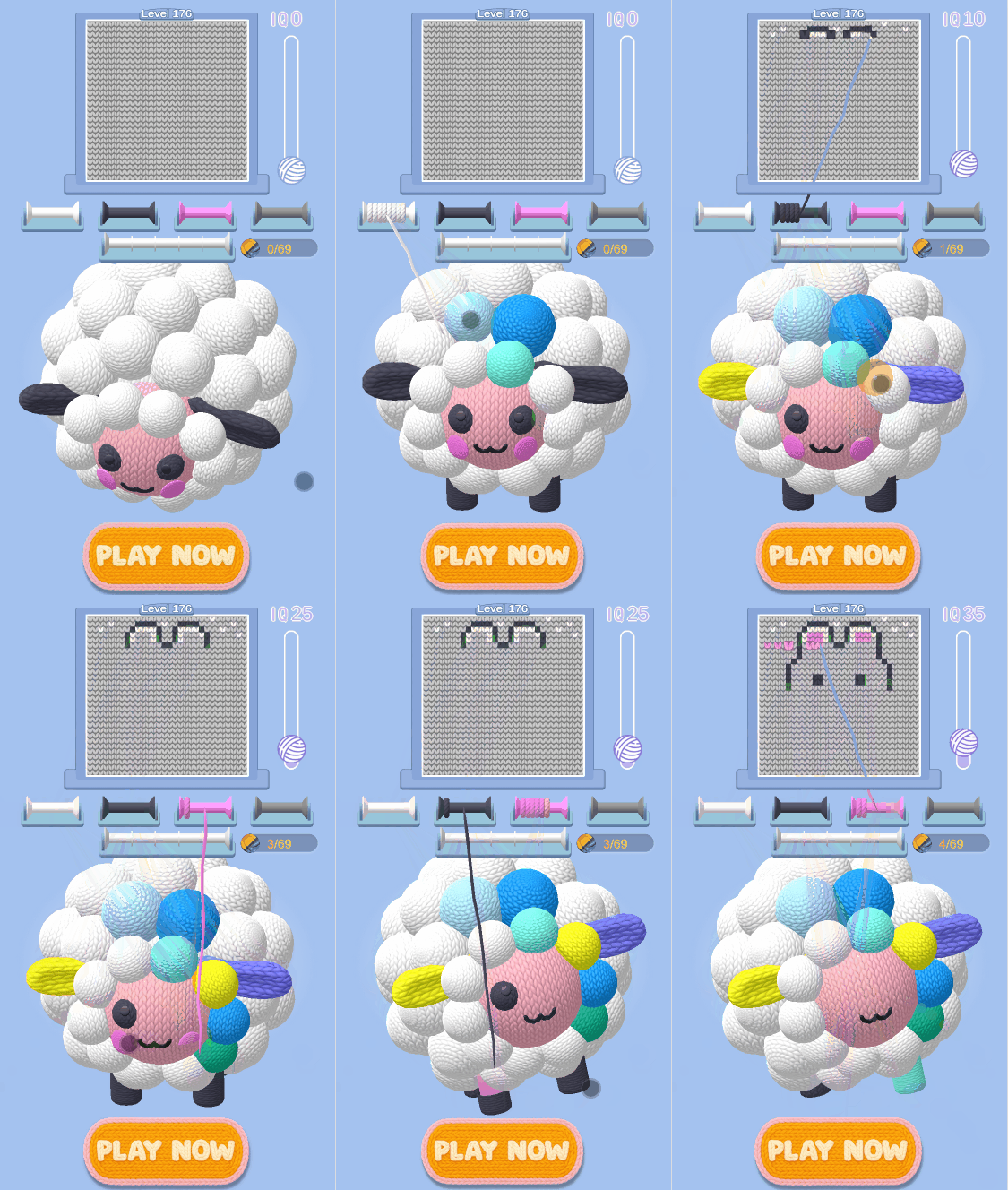
3.Yarn Sorting Variants
Yarn sorting shows how far the screw puzzle mechanic can travel.
Instead of screws, the creative uses colored yarn bundles. Instead of dismantling a hard structure, players pull threads from cute woven objects such as corn, grapes, ice cream, trees, or other soft shapes. The core remains the same: identify the correct color, remove it, sort it, and reveal the next layer.
The emotional positioning changes completely.
The experience feels less like dismantling and more like organizing. The pulling animation is smoother, the material is softer, and the overall tone becomes more relaxing. This gives the same mechanic access to a broader audience and supports wellness, casual, and female-oriented creative angles.
Video Creatives Win by Creating the Right Entry Point
Screw puzzle videos are not limited to gameplay recording. The strongest examples use different openings to position the same mechanic for different audiences.
Four approaches appear repeatedly across top-performing creatives.
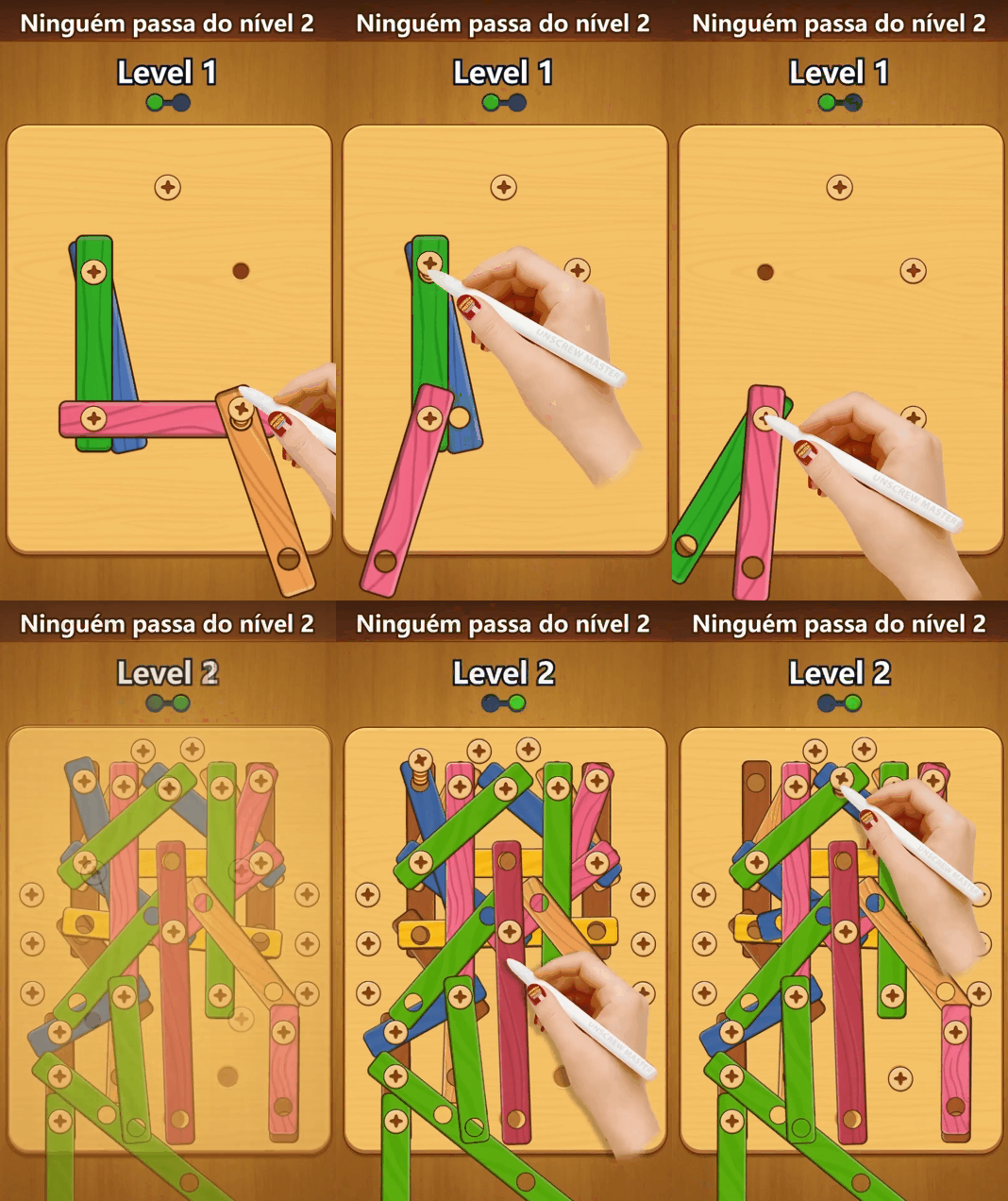
1. Direct Gameplay Demonstrations
This is the most straightforward format. The video shows a level, a hand or cursor removes screws, and the viewer immediately understands the rule.
The best examples create tension instead of simply playing through a level, using wrong moves, nearly full slots, or a partial reveal to make the next step feel important.
Most of these videos cut before the puzzle is fully solved. That unfinished progress is the point. It gives the viewer a reason to continue in the app.
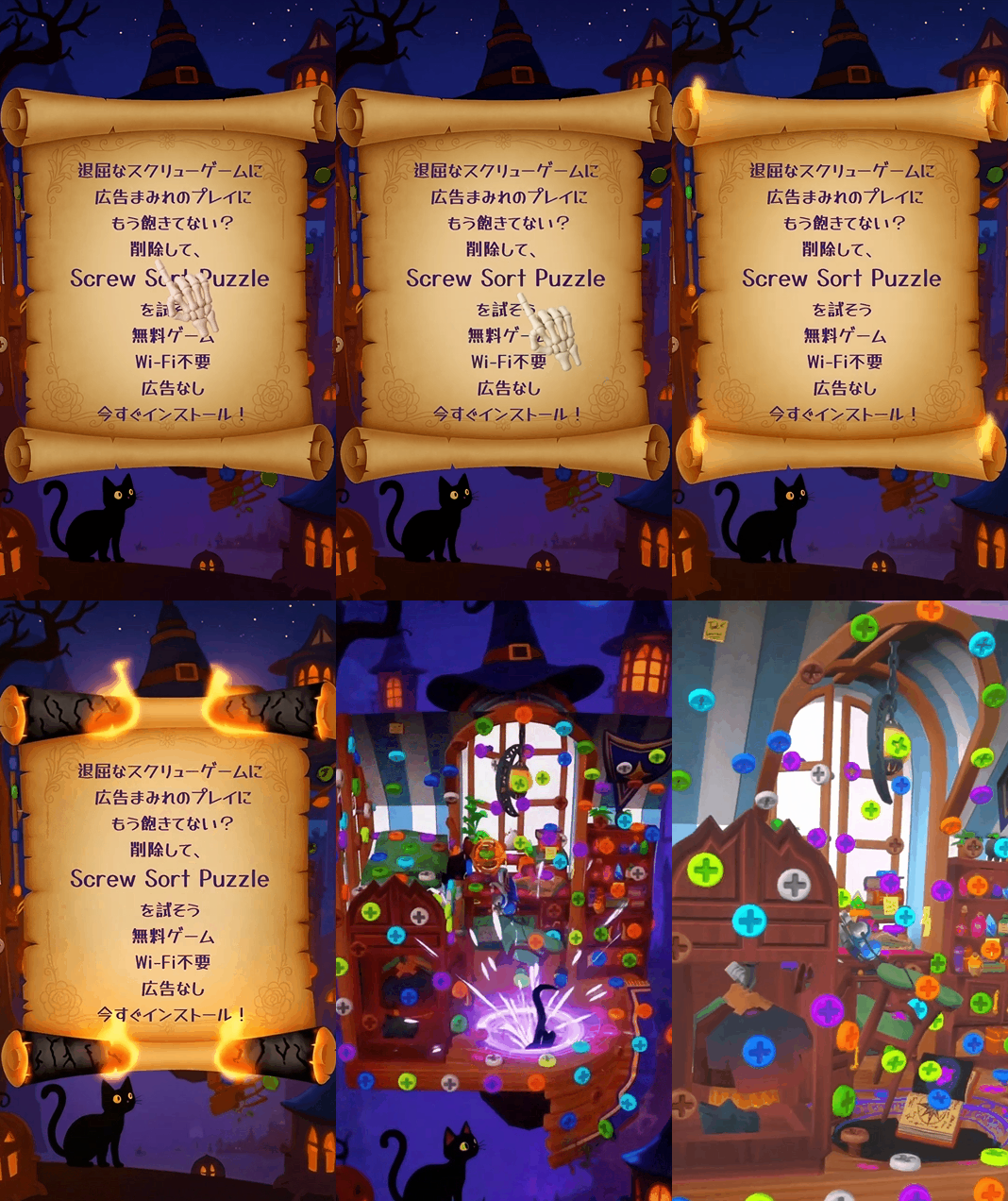
2. AI Scene Pre-Rolls
Some creatives use AI-generated scenes before showing gameplay. These scenes often feature polished 3D screw buildings, complex yarn objects, or fantasy-style spaces.
The purpose is not to explain the mechanic. It is to stop the scroll with visual freshness.
AI scenes work especially well as a pre-roll layer. They can make ordinary levels feel more premium, test new art directions quickly, and create a richer sense of content before the video transitions back into real gameplay.

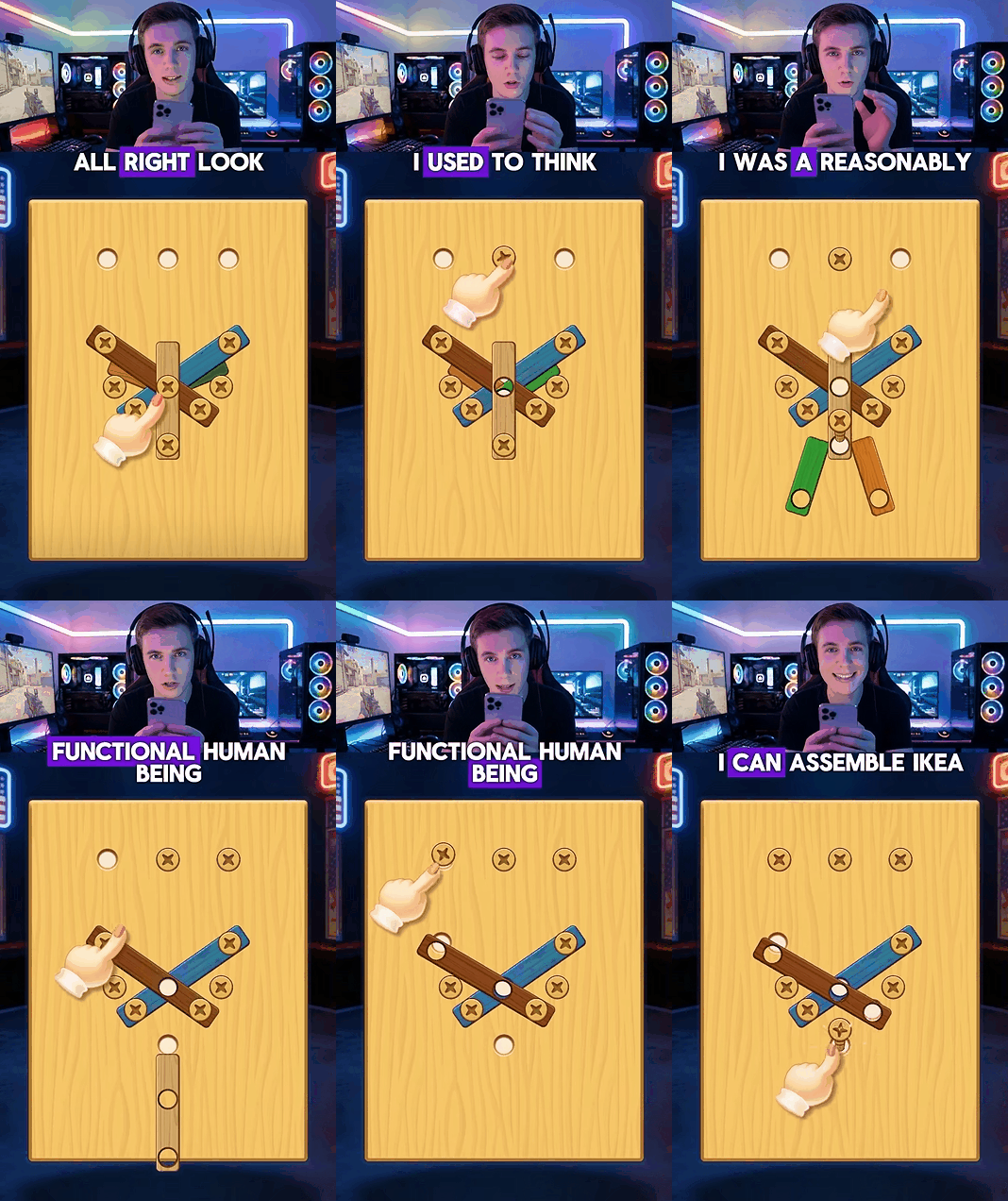
3. Human-Led Hooks
Another common format opens with a real person speaking, reacting, or acting out a short scenario. The setting often looks like native short-form content: home, game room, outdoor space, or a casual creator-style setup.
The goal is to reduce ad resistance. A human hook makes the creative feel less like a direct game ad and more like a recommendation or short content clip.
The gameplay usually appears after the hook, proving that the puzzle is simple, satisfying, and worth trying. This structure is also well suited to localization because voiceover and subtitles can be adapted by language and region.
4. Benefit-Led Openings
Some videos lead with large text instead of gameplay. Messages such as "no Wi-Fi required," "train your brain," "easy on the eyes," "good for seniors," or "free to play" appear in the first few seconds.
The gameplay then becomes proof of the promise.
This format is useful when the campaign needs to position screw puzzles as a low-pressure daily habit rather than a pure puzzle challenge. It is also efficient for batch localization because text claims can be replaced quickly across languages.
Playable vs. Video: Two Different Creative Jobs
Playable ads are strongest when the goal is direct participation. They let users feel the remove-sort-reveal loop themselves.
Video ads are strongest when the goal is positioning. They frame the same mechanic through gameplay satisfaction, visual freshness, human recommendation, or benefit-led messaging.
For playables, the priority is clarity and control. A 2D board should help users understand the first move immediately. A 3D scene should make exploration feel rewarding without delaying the core action. A yarn variant should make the sorting feedback soft, smooth, and visually satisfying.
For videos, the priority is the entry point. Direct gameplay should show satisfaction and slot pressure within seconds. AI scenes should create visual freshness while still connecting clearly back to the game. Human-led hooks should reduce ad fatigue without pushing gameplay too far back. Benefit-led openings should make a clear promise, then use gameplay to prove it.
The common mistake is overpackaging. If the viewer cannot quickly understand what is being removed, sorted, or revealed, the creative loses the biggest advantage of the category.
The Production Implication
For production teams, the implication is clear: screw puzzle creatives should not be rebuilt from scratch every time.
The core loop can stay fixed, while themes, board layouts, visual styles, pre-rolls, and ending moments become the main testing variables. This is what makes the category especially suitable for modular creative production.
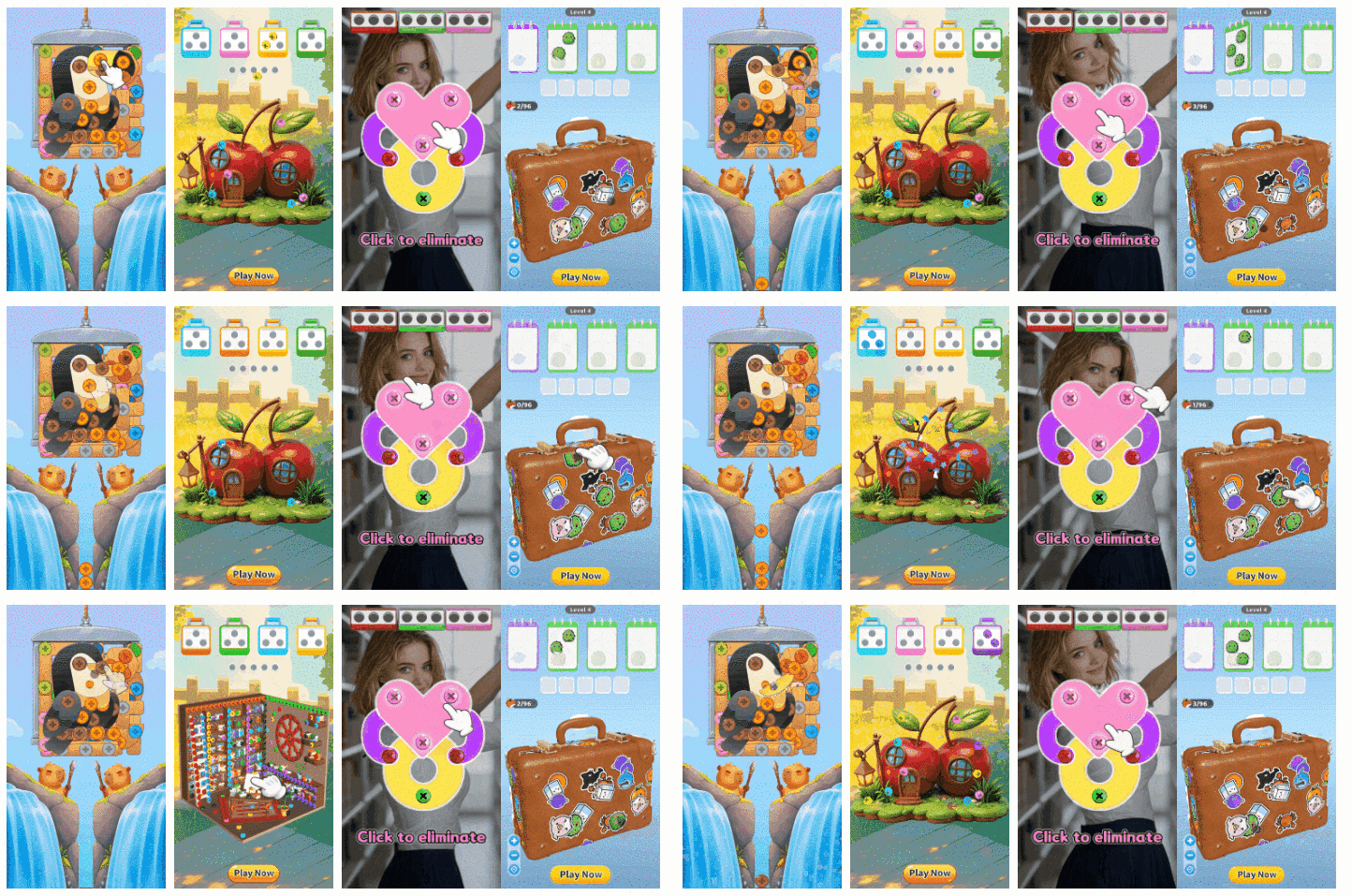
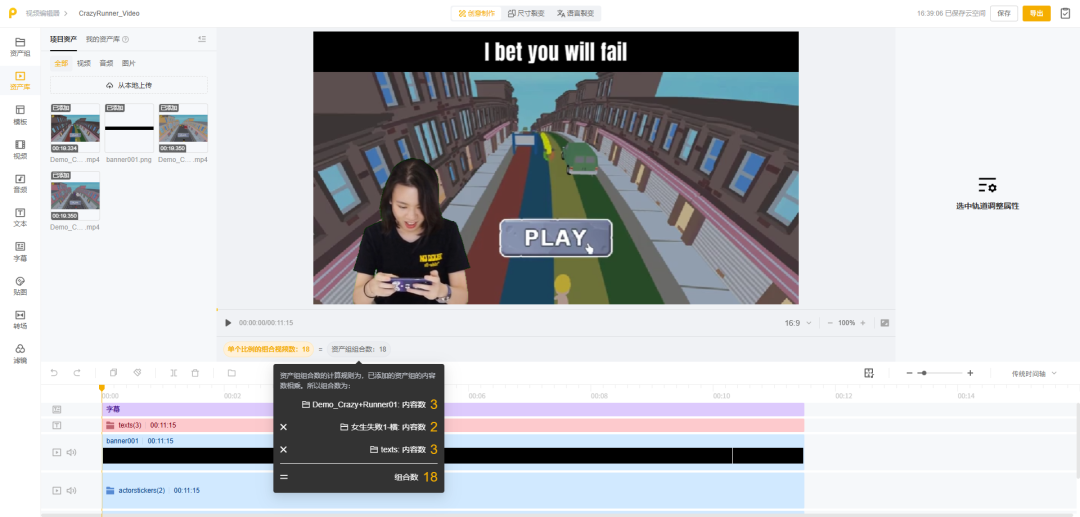
This is where production tools can support the creative strategy without becoming the center of the story. Playable templates can help teams build the basic screw-removal flow quickly, while editors allow deeper changes to layout, progression, and CTA timing. On the video side, batch combination and digital-human workflows can help teams localize hooks, test different benefit messages, and scale creator-style openings without restarting production for every version.
The goal is not to add more production steps. It is to make iteration faster around the variables that actually affect performance: first-screen clarity, slot pressure, theme fit, opening hook, and CTA timing.
Final Takeaway
Screw puzzle creatives work because the growth formula is simple: a locked structure, an obvious first action, visible progress, limited slots, and an unfinished moment that pushes the user to continue.
The biggest opportunity is not constant gameplay innovation. It is disciplined iteration.
By testing board formats, 3D scenes, softer material variants, slot pressure, opening hooks, and CTA timing, teams can expand creative output quickly without changing the core mechanic. In a category built for scalable production, the speed of iteration is often the real advantage.
Ready to elevate your ad strategy? Explore Playturbo's creative production solutions and discover how we help developers generate high-performing AI ads at scale. Follow us on LinkedIn to stay updated on our latest insights, creative breakdowns, and product updates. Sign up today to kickstart your next global ad campaign.